Tuesday, June 05, 2018

Article jointly authored by my wife and myself, and published in Firstpost

70 years of Independence: Mapping 'New India' and its aspirations through the eyes of young civil servants

Civil services in India has for long remained a prestigious and much sought after career-choice for precocious, young talent from varied educational and professional backgrounds. Though the motivation to opt for this career varies starkly from individual to individual – ranging from romantic idealism and a genuine commitment to public service to a sheer attraction for the power and pelf associated with the services. Its irresistible charm has held sway for many decades.
However, over the last several years, a new perception has gained ground. That with increasing influence of market forces in all spheres of the civil servants' lives, and the receding dependence on the State for welfare or even sheer survival, their role in society and their contribution to the process of national development has been on the wane.
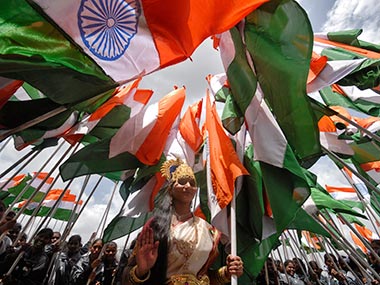
India. Representational image. Reuters
Representational image. Reuters
Being new entrants to civil services, we realise that nothing could be further from the truth and the life-stories of many a new entrant, including the authors' which we will re-visit later, are a complete antithesis to such a proposition. As the fast-paced changes in India's economic and socio-political fabric throw up newer dilemmas and challenges for young civil servants, our mandate might have changed and evolved, as it should in any dynamic and progressive society, but it has certainly not diminished.
In many ways, an increasingly restless society has resulted in the "fierce urgency of now", which demands an ever greater devotion to duty and ability to 'deliver' on the ground. The perception conundrum cited earlier is unfounded and only a myth, reasons for which are three-fold.
First, for the "magic of the market" to work, we need "enabling institutions", which only the State can provide. In his path-breaking book, The Mystery of Capital, Hernando de Soto argues that only a society that establishes the rule of law and enforces property rights witnesses long run economic growth. There are occasions when the market, in its single-minded pursuit of the single 'p'- profit, overlooks the other two 'p's - people and planet. This calls for sound property rights, effective laws, good governance, and a robust regulatory architecture - all of which lie in the realm of today's cutting-edge administrators.
Second, evidence shows that while economic reforms have lifted millions out of poverty, the gap between the rich and the poor must be reduced without further ado. In an increasingly aspirational society, meeting this objective needs the collective creative inputs of many a public servant, especially the younger lot, who deal with the implementation of varied schemes and are the pivot of success or failure of all government endeavours.
Third, for the teeming millions living at the margins of society, the need of the hour is to build up of their capabilities so they may participate in the prosperity this nation has achieved in the last 70 years. The mandate for this still lies with civil services in India.
A plethora of formidable challenges is faced by present-day administrators. The increasingly complex environment in which public servants operate demand enhanced skill-sets for tackling the cutting edge problems like the environment and climate change, disaster management, trade negotiations, and technological innovations.
In rural areas, the focus has been on the provision of basic services like education and healthcare, income support to the poor, provision of productive assets to the impoverished and securing the future of Young India. In the cities, the challenge has been manifold. With rising populations, the focus is on the provision of sanitation, housing, water-supply; re-orienting urban infrastructure to present-day needs and preserving the sense of 'community life and urban culture'. The unfinished agenda of India @ 70 is to ensure 'access and quality' of services like primary education, public health and basic infrastructure.
As in physical infrastructure, more so in human resources, the administration's real challenge lies. The focus is now on developing private productive capacity, infusing competition and encouraging entrepreneurship. The issues have thus evolved and beckon a relook.
Our battle is not with resource-constraint anymore, but with resource allocation. Be it land, finance or skilled labour, resource redistribution and transfer of ownership of productive capital, are affecting a whole gamut of industries and also our manufacturing might.
While policy direction comes from the Centre, all the action now happens in the States, and more so in the districts, where young administrators now have tremendous scope for modernisation, mediation and monitoring. Innovation happens at the cutting edge and it is here that newer civil servants play a vital role.
The ever-evolving mandate of a public servant can be envisaged through the institution of a Collector. Although in many states the development agenda now lies with separate agencies or the Panchayats and implementation work with the many line departments, it is only the office of the Collector that has true insight and overview of governance, and thus has the role of a prime mover in order to deliver services seamlessly to the citizens.
The Collector continues to be at the fulcrum of all service delivery at the local level, and improving his or her efficiency can greatly impact the delivery of services. In his video conference with District Collectors recently, Prime Minister Narendra Modi acknowledged this when he gave his clarion call for India 2017-2022.
In conclusion, we would like to revisit the earlier point of perceived dwindling relevance of civil services today. Having studied at top institutions in the United Kingdom and after working a few years in London with leading banking and consulting firms, we found our calling in the pursuit of public service.
While newer entrants to the services are inherently driven by a sense of righteousness associated with this vocation, a deep-rooted sense of idealism and romanticism still persists. India is already on the brink of the greatest transformation in its history. As Young India teams up to build New India, it is our collective efforts which will determine the reality of tomorrow.
It is this conviction, that civil services continue to be the beacon of change and more importantly the single most powerful and effective medium of bringing about positive transformation in the lives of millions, that civil servants across the spectrum dedicate their lives to the service of this great nation and her people.
The authors are both young civil servants. Views expressed are personal.

Wednesday, March 30, 2016

“The Wonder that IS India” - India and its Thousand Contradictions

Sharing an extremely well written piece by an IAS probationer on her "Bharat Darshan" experiences. Gives you rare insights into "The Wonder that is India", and the way a young civil servant tries to comprehend the method to India's madness.

“The Wonder that IS India” - India and its Thousand Contradictions

By: Aditi Garg

“Not all who wander are lost”, so it is said. But as one sits down to put pen to paper in order to recount all that one has seen over two months, one feels distinctly at a loss. Not for want of words to describe the unparalleled experience, but to undertake the herculean task of squeezing in the two months into a thousand words. What lies below is a microcosm of the phenomenal experience we had during the perceptibly best part of our training- the Winter Study Tour.                

Being born to parents living a constantly peripatetic existence, one has looked upon travel as an indispensable part of life. Having lived in London for almost four years before I decided to return to Indian shores and write the UPSC exam, I had been planning to undertake a tour across the country to familiarize and reconnect with the land and its people. Much akin to Mahatma Gandhi, who upon his return to India in 1915, was advised by his political guru Gokhale, to travel across India to know the great country, its people, its past and its practices, to appreciate its present. Shakespeare, in Hamlet echoes this sentiment: ‘There are more things in heaven and earth Horatio, than are dreamt of in your philosophy’.  

While travelling, one often questioned the very raison d’être of the Winter Study Tour (WST), colloquially called Bharat Darshan. The WST manual graciously reads that, “the Course Team believes that you will find the WST to be an enriching experience”. Travelling, unpacking and then re-packing every alternate day does not give the idea of an ‘enriching experience’, however, it is only when one reflects upon the amazing journey in hindsight, that one is compelled to agree with the Course Team.

Ordinary men, extraordinary deeds

Perhaps the most amazing aspect of Bharat Darshan was the inspirational array of people we met, from all walks of life. One such was Major Akash Tapadiya, of the Chinar Corps of the Indian Army, posted in Tangdhar- India’s westernmost post in LoC, which juts inside Pakistan! A month before we landed in Tangdhar he had been involved in a counter-infiltration operation, where he and his men lay a fourteen-hour ambush to apprehend terrorists crossing the border. Caught in the crossfire, he lost two men, got shot at, yet with tenacity managed to capture three terrorists, and also walked 10 kms in snow all the way back to base-camp with a wounded leg! For his act of bravery and sheer grit he was awarded the Sena Medal this Republic Day, which he dedicated to the Nation and his Regiment.

Valiant soldiers are not the only ones in service of the nation. We met a group of doctors from AIIMS in Delhi, who had given up their successful and lucrative professions to relocate to a remote district in Chhattisgarh, to serve the local tribal population and run a not-for-profit health centre called the Jan Swasthya Sahyog (JSS). Health indicators of this tribal area were abysmal: high infant and maternal mortality rates, extreme prevalence of fatality due to preventable diseases and absolutely minimal access to healthcare. JSS had brought low-cost world-class healthcare to the most backward region of the country. The doctors were selflessly devoting their lives for the most neglected section of the society and were espousing a truly replicable model of low-cost, accessible healthcare.

A collector and CEO-ZP duo of Mandla district showed us how just going that extra mile can bring transformation in the lives of many. They had been instrumental in envisioning and running a unique model of schools called the Excellence Schools that focused on technological interventions in teaching. They ran an award-winning ‘100 Kalam’ project that provided special training to tribal children of Mandla for competitive exams, with some of them even cracking exams like IIT!

If common traits were to be picked, these inspiring men and women showed absolute devotion to their job, selfless service to their fellowmen, and a sense of commitment to their vision. As Eleanor Roosevelt aptly articulated, ‘the future belongs to those who believe in the beauty of their dreams’.

The dazzling diversity of a subcontinent

Starting our journey from the summit of Jammu and Kashmir, we meandered through the length of India to end our magnificent excursion down south in Lakshadweep. We passed such diversity of landscapes that it looked like a kaleidoscope of colours.

While on one hand we trudged the snow-peaked ridges of Greater Himalayas, on the other we were speechless onlookers to the vibrancy of colours of corals and fishes in the shallow waters of Arabian Sea. From the lapping waters of Vizag beaches to the reclusive tigers of Kanha forest, from monumental temples of South to arched shrines of North, we traversed the extent of the country, witnessing a smorgasbord of variety, not just in language, culture, creeds, customs and colours, but truly in spirit. It is this diversity that quintessentially unites us.

The plethora of gourmet delights we experienced left our palettes rekindled. From Malabar fish curry to Jigar-thanda (a sweet from Madurai), from Kashmiri wazwan to kebabs of Bhopal, from pedhas of Agra to fondues of Kerala, the senses were truly revived!

There was no paucity of adventurism in the group and each of us wanted to experience it all. From trekking in Kashmir Himalayas to snorkeling and scuba diving in Lakshadweep, from laying night ambush with the jawans in the Army to tracking the tiger-trail in Kanha, we all seemed to have a common agenda- to make the most of this lifetime experience.

From the cities to the margins: The challenges of governing India

                As diverse the spread of this country, as variegated are the challenges to governance. One of the major objectives of Bharat Darshan is to acquaint the new officers with the difficulties of delivery of public service.

                We saw similar impediments to governance across the country. In rural areas, the same problems afflicted the governments of the day- implementation of govt. schemes, provision of basic services like education and healthcare, income support to the poor and underprivileged, provision of productive assets to the impoverished and securing the future of teeming millions of the population dependent on land.

                Even our cities face analogous challenges- an acute lack of basic services like sanitation, housing, water supply; abysmal state of urban infrastructure; loss of community life and urban culture and unsustainable urban sprawl. While our urban centres face extreme depredation from rising populations and unplanned growth, we have made our cities unlivable even though they account for almost two-thirds of our GDP.

                As much in physical infrastructure, more so in human facilities that administration’s real challenge lies. A visit to one of India’s oldest private sector enterprises demonstrated that governments had failed to develop private productive capacity, infuse competition and encourage entrepreneurship. Mere lip service to ideals, with elusive goals of becoming a manufacturing giant, would not make programs like ‘Make in India’ successful.

                Our battle is not with resource constraint anymore, but with resource allocation. Be it land, finance or skilled labour, resource re-distribution and transfer of ownership of productive capital, have affected whole gamut of industries- from coal-mining which we saw at Southern Coalfields to heavy metals evidenced in poor performance of BHEL.

                A plethora of formidable challenges face present-day administrators. Preservation of our resources- ecology, traditional customs and practices or art and culture, is a pressing one.     Many artifacts of national heritage lie uncared for, like the 200-year old “Company-style paintings” we found abandoned in a forgotten corner of Bangalore’s library; or the defacing palace of the Raja of Madurai. There is also an urgent need to invest in scientific and technological advancements and move people away from superstitious beliefs. We evidenced a tribal community in Chhattisgarh refusing healthcare interventions and preferring occult practices, even such as beating neonates and keeping lactating mothers hungry for days. These diabolical practices fly in the face of reason. We must instill scientific temper and a spirit of enquiry in the people of this nation, so that we may embrace scientific developments and not be suspicious of technological interventions that can bridge the last mile.

                The magnitude of our challenges has not yet been met with the measure of our actions. Administrators face a tall order, and almost consistently across the country confront similar challenges.

Method to the madness - Learning from best practices

                One of the key objectives of the Bharat Darshan is to provide Officer Trainees with nuggets of insights that would hold us in good stead, once we assume our roles in the field. An abundance of best practices were observed on our travels that one would want to replicate in one’s own career. Be they in urban development like the city administration model of Greater Vizag Municipal Corporation with planned progress towards making Vizag a “smart and resilient city”; or in slum redevelopment by the Bangalore Slum Development Board and the innovative “sheer wall” house design they had devised; or in the implementation of Govt. schemes like the well-acknowledged Lado Abhiyan of M.P Govt, there were lesson galore!

                One hopes to inculcate many practices observed during the WST that would not only help us in becoming more efficient public servants but also make us more effective in our professional and personal lives. We learnt from observing scientists at ISRO’s Sriharikota Space Centre that excellence can be imbibed as a way of life. From the city planners of Vizag we learnt that participative approach to development can be instilled in every facet of governance. From self-help groups of women in Andhra Pradesh, we learnt that for the marginalized, strength lies in numbers. From the selfless service of doctors of JSS in Chhattisgarh we observed that we must endeavour towards higher and nobler ideals in all that we do.

                We covered a great length in a short time, and were still left wanting for more. What we take back is not merely a collage of memories, but a glimpse into the life-force which is the essence of this country. We carry with us images of this land and its people, and insights into administration and what that entails for a nation like India. As one reflects over the two months of travel, one cannot but feel that the Winter Study Tour has truly been an “enriching experience”, as predicted by the Course Team. This Bharat Darshan would carry lessons for us well into our future and most gratifyingly if we can imbibe some of the learnings in our professional lives as public servants. As eloquently expressed by T.S. Eliot, on the rewards of travelling:

“We shall not cease from exploration.
And the end of all our exploring,
Would be to arrive where we started,
And know the place for the first time”

Saturday, September 12, 2015

Politics as Vocation?

There is a famous saying: Everybody wants to go to heaven but nobody wants to die. Almost in the same spirit President Kennedy had once characterized politics as: Mothers all want their sons to grow up to be Presidents, but they don't want them to become politicians in the process.

Unfortunately, this cynical view of politics, all pervasive in today's world, results from what many experience of everyday politics as a Machiavellian saga of unabashed power struggle for power per se, which finds a striking portrayal in George Orwell's following words: "Politics is a mass of lies, evasions, folly, hatred and schizophrenia." In this view power is derived and held, with no holds barred, by divisively deepening the faultlines of society - caste, religion, or region - to create imaginary enemies among ourselves, almost in line with the African proverb: I and against youwe against theyall of us against the rest of the world.

But politics is not all about this mindless power game. It is and ought to be, as it has been, even if intermittently, the pursuit of commonality when, through public deliberations, collective power - yes, power - is used but to bridge the faultlines than fracturing them further to promote and protect the well-being of the collective. Recall, for example: Sant Kabir's immortal wisdoms in his dohas that uniquely preached a universal path which both Hindus and Muslims could tread together; Gandhiji's entire life as an experiment to establish conviction in compassion for universal humanity; or Martin Luther King's historic speech of "I have a dream" mobilizing Americans for the cause of Civil Rights, which were indeed ideas and practice of power, but power of the kind that influenced millions to inclusively chart out a destiny of dignity and well being for mankind. It is this pursuit of politics, of what Weber in his classic Politics as Vocation had said "a passionate devotion to a cause" that strongly interests me to pursue it as a hobby.

As a hobby, then, my engagement with politics essentially refers to (a) gaining knowledge about the dynamics that employ power to achieve common good; and (b) contributing in modest ways to strengthen such dynamics.

(a) Keeping myself constantly aware of important events and debates surrounding endeavors to bring inclusive social change is something that I instinctively pursue. Understanding how a number of individuals around the globe, even if only a handful, put their entire life at stake, and make substantial sacrifices, to serve society by making the best use of political medium, thereby employing power as a transformational tool, is a hugely interesting arena for me to unravel, and inspiring as well. This drives me to, for example: readings books and articles, following relevant websites and e-news portals, listening to lectures in seminars, etc., watching podcasts, and the like that cover such events and debates.

(b) I try to give expression to my passion for politics with the help of knowledge so gained in a number of modest ways, but fundamentally they mean engaging with others, across lines of difference, on matters of public or common interest. These include, for example, participating in debates on issues of social and contemporary relevance, in directing plays that convey a social message, and simply sitting down with friends and colleagues to discuss issues of importance. By seeking to draw meaning from the seemingly naive and even day to day interactions with others, by influencing others to see my point of view or to enhance my knowledge from their multiple perspectives, and in the process by advancing inclusive ideas and practices together, I do my bit to strengthen the ongoing pursuits of commonality and, thus, in a way I practice politics, every day, every time.

I would like to conclude by saying that howsoever challenging this idea, or to many - the ideal, may be, but one of the ways we can help actualize this as ordinary citizens, and thereby counter the cynicism surrounding it, to render politics relevant to lives of the million is by shunning politics as a source of living and, thus, exploring and enjoying it as a hobby, in the sense I have expounded above. Also, politics is incomplete without the voice and action of young people like us. By exploring politics in its broadest sense, politics will become more relevant to the youth, and the youth will become more relevant to politics. I indeed enjoy it as a hobby.

The State's Conundrum: 'Enabling' Growth, 'Commanding' Development?

The saga of humanity's monumental struggle for dignity and prosperity never allows puzzles to end. Ever since India's celebrated economic reforms of 1991, its principal political formations, the BJP and the Congress, despite concurring on the need for reforms, have engaged in a fascinating clash of ideas on the relative role of Government and the markets in societal progress. The recent emergence of the AAP as a representative of the aspirational underclass has intensified the debate further. While none of them see the State and the market as engaged in an intense zero-sum game, there is considerable difference in emphasis, and in accent, which often is disproportionately skewed in favour of one or the other. A clear understanding of the role of Government in achieving growth with justice is critical to achieving lasting political success. And it is this lack of clarity and conviction that led to the political demise of the post-1998 regimes, and threatens to derail the present Government's initiatives, that are rooted in a long-term vision for systemic change.    

For several decades, the famed Washington Consensus enjoyed a virtual monopoly over providing the “right” prescriptions for growth and development. The essence of the consensus – expanding the role of the market forces and constraining the role of the State – has been considered sacrosanct. By integrating into the world economy, and allowing for greater private participation and more competition, the Indian “tiger’’ seemed to have been uncaged. Resultantly, India entered the 21st century with reforms akin to her ‘second independence’, though with due caution and gradualism.

However, is this road sustainable? Will this counter the charge levelled against the previous socialist path, that it hadn’t made the poor rich, but had made the rich poor in the name of redistributive justice? Or will it make the rich richer and poor poorer? Aggressive growth-promoting strategies seem to crowd in benefits in the already prosperous sub-national regions that have good infrastructure and a developed entrepreneurial class. While GDP growth makes for good headlines, it must transform the lives of common people, not just transform economies. As a scholar strikingly describes, "benefits of reforms for most people seem like what the revolution was for many sceptical leftists: it was always coming and never arriving." Besides, successive Governments have underestimated the curse of inequality. From Joseph Stiglitz to Thomas Piketty, there is no dearth of compelling evidence that inequality is increasing. It is in this that the geneses of slogans such as "development with justice" and "reforms with a human face", which reverberate in Indian politics today, can be traced.

The Delhi elections saw a resounding vote by the poor and the middle class in favour of a political upstart. Globally, the rise of the Workers Party in Brazil, the Syriza in Greece, and the Hong Kong protests have all been triggered by issues of inequality and lack of opportunities. The message for political parties is clear. No Government in India can survive when it is seen as ignoring the needs of the vast masses. The then Government realized this through the "India shining" debacle in 2004, despite scripting pioneering reform success stories, and genuinely improving the quality of public services such as telecom, LPG cylinders and road connectivity. But Governments can also no longer survive by arrogantly donning a mai-baap mantle, simply keeping the poor alive through doles of wage employment, without simultaneous pursuit of transformative income generation programmes, and expanding their capabilities through education and skill development. By denying the poor productive assets, skills or credit, the previous incumbent failed to let them becomes masters of their own destinies.

So how must the State reassert its relevance, or in Dani Rodrik's words, "reinvigorate its capability"? And has the present Government drawn insights from history and politics, and properly understood its mandate? Firstly, the “magic” of the market works only when there exist competitive conditions, via ‘enabling’ institutions - property rights, legal structure, governance mechanism, and regulatory bodies. "Getting institutions right", says Douglass North, is even more important than "getting prices right". A society that establishes the rule of law and enforces property rights witnesses long run economic growth, which is the key pillar of capitalism's relative success in the western world. The State, thus, must design sound laws, ensure their strict enforcement, and put in place an enabling environment for private enterprise to flourish.

The Government seems to be honouring the above social contract rather well. Its series of initiatives on simplifying tax laws, promoting ease of doing business, growth-friendly legislation such as Land bill and GST, creation of a transparent resource allocation mechanism, seizing the demographic dividend through job creation, promotion of FDI, tentative labour market reforms, revival of disinvestment, and concrete steps to bring back black money, point towards a relentless pursuit of enabling conditions for furthering growth.  

But while State the "enabler" facilitates economic growth, for economic development - that decisive shift in society's equilibrium levels - State the "commander" must fulfil its primary obligations, and place itself back at the centre of developmental discourse, even if in a new avatar. By heavily investing in health, primary education and infrastructure, while improving its governance for programmes to work effectively at the grassroots, it must, according to Amartya Sen, build up the capabilities of millions of people in society, who live at its margins, and for whom the market doesn't exist, and empower them to participate in the expanding prosperity, thus rendering it truly inclusive.

Programmes such as Skill India show that the Government is not oblivious to this challenge, but a simultaneous reduction in allocation for pioneering schemes such as Sarva Shiksha Abhiyan, Mid-Day Meal and ICDS has sent conflicting signals. Budgetary allocation for education and healthcare sectors are c. 4% and 1.2% of GDP respectively, much lower than the target of 6% and 2.5%. Ironically, even developed countries never envisioned a trade-off between social spending and growth. Make in India can complete that vital missing link in India's growth trajectory - absence of a job-creating manufacturing sector. But that must be accompanied with devoting resources to education, health and food programmes, as growth depends on creating a dynamic workforce capable of learning.

The long-term gestation period of the Government's major initiatives, which undoubtedly aim at sustainable poverty reduction through job creation and skill enhancement, must be properly conveyed to the aspiring classes, especially the rural poor, who, seduced by promises of acche din, expected instant results. This will require deft political communication, but that is imperative if the pent up aspirations of India's teeming millions are not to spill over onto the streets¸ as famously predicted by Albert Hirschmann in the "Tunnel Effect".

Lastly, it is vital that while encouraging private enterprise, perceptions of a nexus between the ruling and the affluent classes are kept at bay. Perceptions, in politics, are reality, and the Government must be outspoken in its denial. Otherwise, it can cause major electoral reverses, and prevent the Government from fulfilling its long-term developmental vision. That, tragically, will be a colossal betrayal of many a hopes and aspirations, and in countering this, the Government confronts the "fierce urgency of now".

Monday, April 17, 2006

Do Economic Reforms Hurt the Poor?: The Case of India

Pandit Jawaharlal Nehru, the first and a charismatic Prime Minister of independent India, believed that the state only could decide what is best for the nation. Hence, setting up massive public sector units to let them acquire commanding heights of the Indian economy remained his priority. Those gradually became inefficient, cradles of wastage and corruption, and caged in the “tiger” of private and creative energy and initiatives for many years. Nehru had no faith in the private entrepreneurs.

By cautiously integrating into the world economy, once India broke free from this stifling era in 1991 and allowed for greater private participation and for more domestic and international competitions, the “tiger’’ seems to have been uncaged. As a result, the notorious never-changing average Hindu growth rate of 3 %-- a term satirically coined by the famous Indian economist Prof. Krishna Raj, with which India grew in her first 40 years, for the first time started to rise to eventually reach an average of about 6.5 % in the last decade. The “tiger” seems to be roaring with all its might, yet in cautious measures and with gradualism, taking India into the 21st century with reforms that can be termed as her ‘second independence’ – from the clutches of the ‘License Raj,’ while also not allowing the newfound enthusiasm to let it lapse into financial crises that the other East Asian Tigers recently had been mired with.

However, do these reforms actually help the poor? Or do they make the rich richer, and the poor poorer? Experiences of those sub-national states in India, which hadn’t been doing well before, suggest otherwise. So do the tales of Soviet Russia and the East European transition economies. They all point towards one crucial question: are reforms anti-poor?

A critical analysis of this question will lead to a clearer understanding of the issue. Since India actually started reforming, the number of people living below the poverty line has been declining by roughly one percent per year. This implies that as many as 200 million people have escaped from the clutches of poverty in the past two decades. The reforms are actually the best bet for poverty reduction. They are aimed at building an open, competitive and productive economy, which will grow faster, create more jobs, and in time, wipe out poverty. An 8% GDP growth rate for over 5 years might make the top 10% richer by 100 times, but if it also enables 100 million people to rise above the poverty line, is it a gamble we will be unwilling to take? The answer is no. Reforms don’t hurt the poor. Scrapping licensing has hurt the corrupt bureaucrat and the bribe-giving businessman. Privatizing public sector units have hurt the overpaid underperforming worker, who is now expected to deliver. The opening up of the economy has hurt those Indian companies who are unreceptive and unwilling to change and compete. Labour reforms do not actually hurt the poor; the United States and United Kingdom, countries having the most flexible labour markets on earth, have actually witnessed a remarkable decline in activities falling under the category of ‘trade unionism’.

For long, economists in India have argued that subsidies don’t really benefit those at the bottom of the pyramid. They actually are gobbled up by the rich agriculturalists and those who have connections inside the corridors of power. The subsidies actually distort the price mechanism and misallocate society’s scarce resources. Hence, scrapping of subsidies don’t really damage the poor.

Markets are not inherently ‘good’ or ‘bad’. What is important is to understand the conditions under which they fail, or display inefficiency. They fail not because they are unresponsive to price changes, but due to lack of incentives, and improper information. There are two ways through which the poor will rise. One is through rapid economic growth, and this only the market can deliver. It is a wonder that the Government in India still needs to be reminded of this simple yet powerful truth, and has to be persuaded to keep out of production of goods and services. The State has to play the role of an enabler, and not a commander.

But it is through the second way that the poor will truly rise. The Government must invest, and invest heavily, in education, health and key infrastructure. It must empower the poor, and ‘expand their capabilities’, to quote Prof. Amartya Sen, so that they have more choices. As our economy has transformed over the years, our understanding of how to tackle poverty has also metamorphosed. In the 1950s and 60s, we focused on land reforms and land ceilings, and to some extent succeeded. But then, the overwhelming reality that redistributive measures hurt the very class that controls the system, and that in a democracy, there is a limit to radical measures, dawned upon us. Then, in the 70s and 80s, the romantic notion of wiping out poverty through employment guarantee fascinated the entire nation. The very idea of creating durable economic and social assets and eliminating poverty simultaneously was too tempting. We spent a monumental amount of money, and that turned out to be a monumental failure. Because of the Government’s faulty deliverance mechanism, the poor came face-to-face with very few tangible benefits, and most of the money was drained out in paying for administrative costs and in ‘leakages’. Also, so much stress was laid on equality of income that the country’s policy makers forgot the salience of equality of opportunity. Equality of income, which anyhow is a utopian concept, was sought to be brought about by the Government not by making the poor richer, but the rich poorer.

Only after the economic reforms of 1991, a general consensus emerged that the Government must limit itself to toning up primary education facilities, healthcare systems, and infrastructure. This coupled with rapid economic growth (for which we must reform), and improved governance at the grassroots level, will bring down poverty at an unprecedented rate. As per Prof. Sen, development is all about enlargement of opportunities for the individuals in society. Investing in education, health and infrastructure will lead to an expansion of their capabilities – by increasing their freedom to pursue what they value.

Development Economics: The Journey So Far

Development Economics: The Journey So Far

Development studies is about finding solutions to the problems of poverty and destitution -- the conditions under which the vast majority of the world's population continues to live -- despite the promise of modern technology.
-- Prof. Dani Rodrik

The Economics of Development comprises of a study of the problems of developing nations. Though a relatively new field, it has emerged as one of the most complex and fascinating branches of Social Science.

The subject arose as a major discipline in the aftermath of the Second World War, as an answer to the desire for a clearer direction on how to achieve economic progress and prosperity, expressed by the newly independent nations of Asia, Africa and Latin America. A significant change that accompanied this rise was in the way the Western world addressed the poorer nations – from being ignominiously referred to as “backward” and “barbarous”, they started being called as “less developed” or “developing”. Apart from the above mentioned desire for progress, the realization amidst developed nations that poverty anywhere is a threat to prosperity everywhere served as a major fillip for the emergence of a comprehensive subject dealing with the problems of development.

What constitutes economic development? How can it be measured? These questions, at the outset, might seem trivial, but answers to these are revealing, and also a source of widespread debate. An increase in per capita GNP [the per head value of the goods and services produced by a country] has long been seen as the most powerful indicator of development. However, rising per capita income cannot be regarded as the end all of the process of development. This definition is subject to several flaws. Firstly, it does not take into account the distribution of income. An extremely affluent majority can propel the rise of the per capita income, while the vast majority may remain poor and deprived. Secondly, per capita income cannot be an indicator of well being. Two nations with equivalent figures for the same might, and do, differ markedly in various other parameters that are seen as central to the development of a nation, say, for example, the status of health of its citizens.

Economic Development v/s Economic Growth

Herein lies the distinction between economic growth and economic development. While the former refers to an increase in income levels, the latter is seen as a much broader concept, encompassing growth. It points to the increase in the well-being of the people. Now, what comprises well-being is a subjective question, and will differ from person to person. However, broadly, all of us will agree that in addition to rising income levels, educational attainment, good health care facilities, access to safe drinking water, sanitation, sound infrastructural facilities – all these, and much more, determine well-being. We can go on and add political freedom, law and order, human rights, time for leisure, etc. as additional factors that play a role. Thus, economic development can only be achieved when improvements are registered in all, or most of these.

Some economists suggest that growth is a primary concern of developed nations, while development is sought by developing nations. A better definition highlighting the difference between the two concepts was given by the famous Joseph Schumpeter, who said that economic development marks a decisive shift from one equilibrium level to another, while economic growth is marked by steady, continuous changes in the level of income over a long period of time.

However, many times, in our attempts to dismiss proponents of rising per capita GNP as the chief driver of economic development, we tend to misunderstand them. Consider the following statement made by Robert Lucas, in 1988:

By the problem of economic development, I mean simply the problem of accounting for the observed pattern, across countries and across time, in levels and rates of growth of per capita income. This may seem as too narrow a definition, and perhaps it is, but thinking about income patterns will increasingly involve us in thinking about many other aspects of societies too. So I would suggest that we withhold judgment on the scope of this definition until we get a clearer picture of where it leads us.

It might sound surprising but on the question of what constitutes economic development, there exists broad agreement. The advocates of the “per capita income” definition, never for once, see rise in levels of the same as the end, but instead, see it as the means to development. They suggest that in one way or the other, a rise in per capita GNP facilitates the achievement of the broad targets of development – good health care, high literacy, rising standards of living, etc. Thus, their attempt to classify per capita GNP as the main facilitator of the developmental process is only an endeavour to simplify things by bringing down the number of variables to be studied in correlation with development. This is critical, and a clear understanding of this would enable us to forego long held biases against the income approach.

The Varying Approaches to Economic Development

The leaders and policy makers of the newly independent nations of the 1940s and the 1950s had a strong mistrust against the markets, and believed that market failure is a recurring and inevitable event. Their strong prejudice against the market economy led them to establish state controlled economies, in which the production process was controlled by the Government. Private enterprise was curbed, and massive public sector units were setup. International trade, which later went on to script remarkable success stories in East Asia, was shunned. Export promotion gave way to import substitution. These policies stemmed not so much from economic analysis but from political ideologies. This was also the era when rising per capita GNP was seen as the end of the development process, rather than the means. Ragnar Nurkse’s Balanced Growth Model competed later on with Albert Hirschman’s Unbalanced Growth Theory. The Balanced Growth Model called for simultaneous development of all sectors of the economy, while Hirschman, in his theory, criticized this as utopian and called for concentration of the limited economic resources into developing specific sectors.

Hirschman’s theory merits greater attention. Since resources are limited, he called for investment in strategically selected sectors, ones that can lead to new investment opportunities, thus causing greater economic development. He believed that certain investments have the tendency to appropriate more external economies (created by past investments) than they actually create. He called them ‘convergent series of investments’. Vice-a-versa, investments that create more external economies than they actually appropriate were termed as ‘divergent series of investments’. Obviously, the focus, as per him, should be on investment of the second type. He favoured the creation of imbalances in the economy via two routes – the imbalance of Social Overhead Capital (SOC) or the imbalance of Directly Productive Activities (DPA).

Owing to the scarcity of resources, Governments can invest in either SOC or DPAs, not both simultaneously. SOC are basic services like education, health, communications, transportation, power, etc. without which productive activities cannot function. It creates external economies, while DPAs appropriate them. A large investment in SOC will facilitate and encourage private investment in DPAs. For example, cheaper power supply will lead to setting up of small industries. This is called unbalancing the economy with SOC. The economy can be unbalanced with DPAs also. If DPA investment is undertaken first, shortages of SOC are likely to raise production costs. Mounting political pressure will then lead to greater investment in SOC.

The late 1960s and 1970s witnessed a direct focus on eradication of poverty and inequality. The very meaning of development was questioned. The term acquired the meaning that it carries today, and became much wider scope than just augmentation of incomes. Industrial development gave way to focus on rural development, which fascinated most economists. Growth, most of them felt, was having only a ‘trickle-down effect’, and thus intensive approaches to eliminate poverty started being undertaken. Growth was important, but with a sense of redistributive justice. Meeting the basic human needs was also a primary concern of the economists of this generation. The long neglected human resources also found a place for themselves vis-à-vis the development of physical capital.

However, in the 1970s and 1980s, as planned economies started to fail miserably, hope gave way to despair. Corrupt rent-seeking Governments gave no incentives to the public sector units to perform, which, devoid of a competitive market, became cradles of corruption and hallmarks of inefficiency. As the world realized that protected economies, where free enterprise was anathema, were fast moving towards complete failure, the resurgence of neoclassicism was imminent. The ‘modern neo-classicists’ once again emphasized the supremacy of the market, and emphasized the need for laissez-faire. They argued that markets are not inherently ‘good’ or ‘bad’. What is important is to understand the conditions under which they fail, or display inefficiency. They fail not because they are unresponsive to price changes, but due to lack of incentives, and improper information. This was a path breaking concept, and marked the evolution of the theories of incentives and incomplete information. Economists of the likes of Nobel Laureate Joseph Stiglitz and Hal R. Varian became champions of these branches.

Privatization, globalization, disinvestment – these have become the new mantras of economics. Countries have started reforming, and have taken steps towards cleaning up the cobwebs of the past. The East Asian economies took the lead in this process. China followed in the late 70s, and India caught up, albeit after a major economic crisis, in 1991. Inward-looking policies highlighting import substitution were replaced by the dynamic mechanisms of export promotion. Disagreements over the pace and sequencing of reform are aplenty. The ‘East Asian Tigers’ reformed with great zeal, but were in a hurry, which led to considerable successes, but also to the major economic crisis of 1997. India took gradual and cautious steps, which was frustrating, but enabled it to come out unscathed from the 1997 crisis. These cautious measures towards reforms have the stamp of approval of influential men of the likes of Dani Rodrik and Joseph Stiglitz, who have studied the progress of the ‘transition economies’. The failure of Soviet Russia and the East European economies have added considerable fuel to the fire. However, the general commitment towards the very process of reforms remains strong, and the motives and vision of reforms are seldom questioned.

‘Development as Freedom’, and Cause for Hope

Development can be seen as a process of expanding the real freedoms that people enjoy.
-- Amartya Sen

Nobel Laureate Amartya Sen has, through his immensely powerful persuasive skills, put the philosophical notion of human capabilities at the centre of public policy debates. As per Sen, development is all about enlargement of opportunities for the individuals in society. This implies an expansion of their capabilities – by increasing their freedom to pursue what they value. Capability expansion is all about increasing choices as far as how to lead one’s life is concerned. Development involves removal of all sources of unfreedom – economic, social, political, etc. Thus, expansion of freedom and eradication of barriers to the same are both the ends and the means of the developmental process. A society can be termed as ‘developed’ in the real sense, only when its citizens have multiple choices, and are free to exercise their judgment about what choice to make.

Sen’s insights can be regarded as a logical culmination of the process that was going on since the origin of the subject in the 1940s. From rising incomes, to increase in well-being, to expansion of freedom and capabilities – the journey of development has been an eventful one. At present, we have the best chance of fulfilling our long cherished dreams of a world free of poverty, ignorance and hunger. China is taking giant strides towards achieving economic prosperity. India is fast catching up. This accounts for 1/3rd of the world’s population. Latin America and Eastern Europe have problems, but genuine attempts are being made in these parts to solve them. The major concern today is Africa. Unlike other developing nations, this ‘hopeless continent’ has actually seen a rise in the absolute number of people living below the poverty line in the last decade. Corrupt and unaccountable Governments are seen as the major cause of this, and the worry that without good governance, development simply cannot be ushered in, is genuine. However, the recently concluded G-8 Summit in Gleneagles, where the world’s richest nations announced a major and long due debt relief package for the continent, and the World Bank’s latest initiative to transform Africa into a ‘Continent of Hope’, are steps in the right direction. If these efforts continue to be undertaken with utmost sincerity, Africa will slowly, but definitively, inch towards the path to prosperity.

The world has entered the new millennium on the brink of the greatest and most significant transformation in history. Who knows, a poverty/ignorance/hunger free world might become a reality in our lifetimes. Till then, the holy fingers are crossed.